Waiting for lunch
Harvester ants make up much of a Texas horned lizard’s diet. It can wait beside an ant trail and pick off passing ants with quick flicks of its tongue. Beetles and other small creatures sometimes end up on the menu, too.
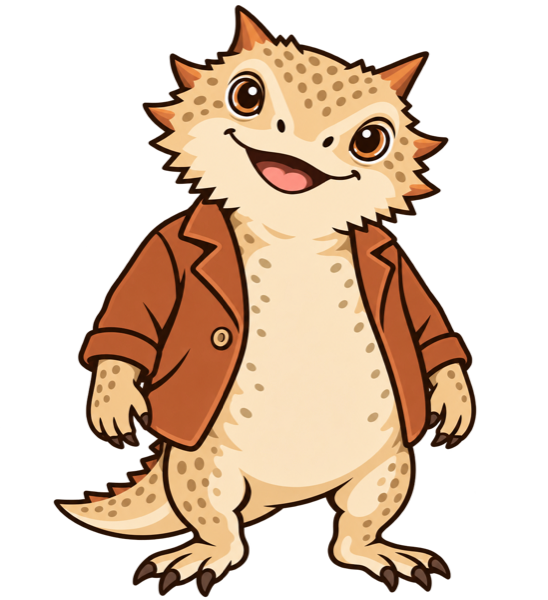 hey, horny toad!
GET TO KNOW THE TEXAS HORNED LIZARD
A wide little body, a short tail, and a head full of horns. There’s a lot to notice when a horny toad holds still.
“Horny toad” is a nickname. This animal is a horned lizard—a reptile with scales and claws. The one shown here is the Texas horned lizard, Phrynosoma cornutum.
More about horned lizards · Texas Parks & WildlifeA CLOSER LOOK
Start with the back, then look underneath. These illustrations show the same species from two sides.
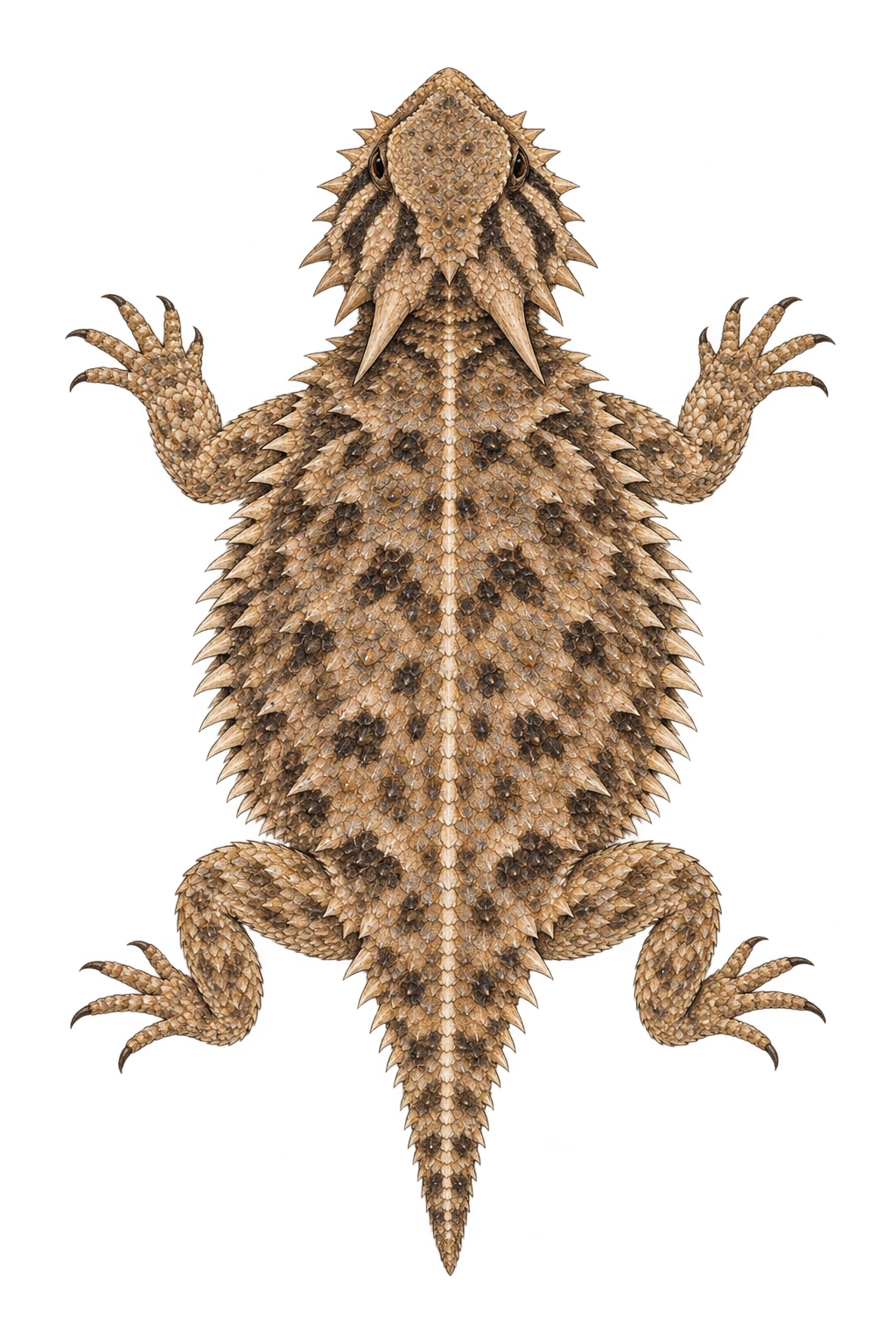 Head
Head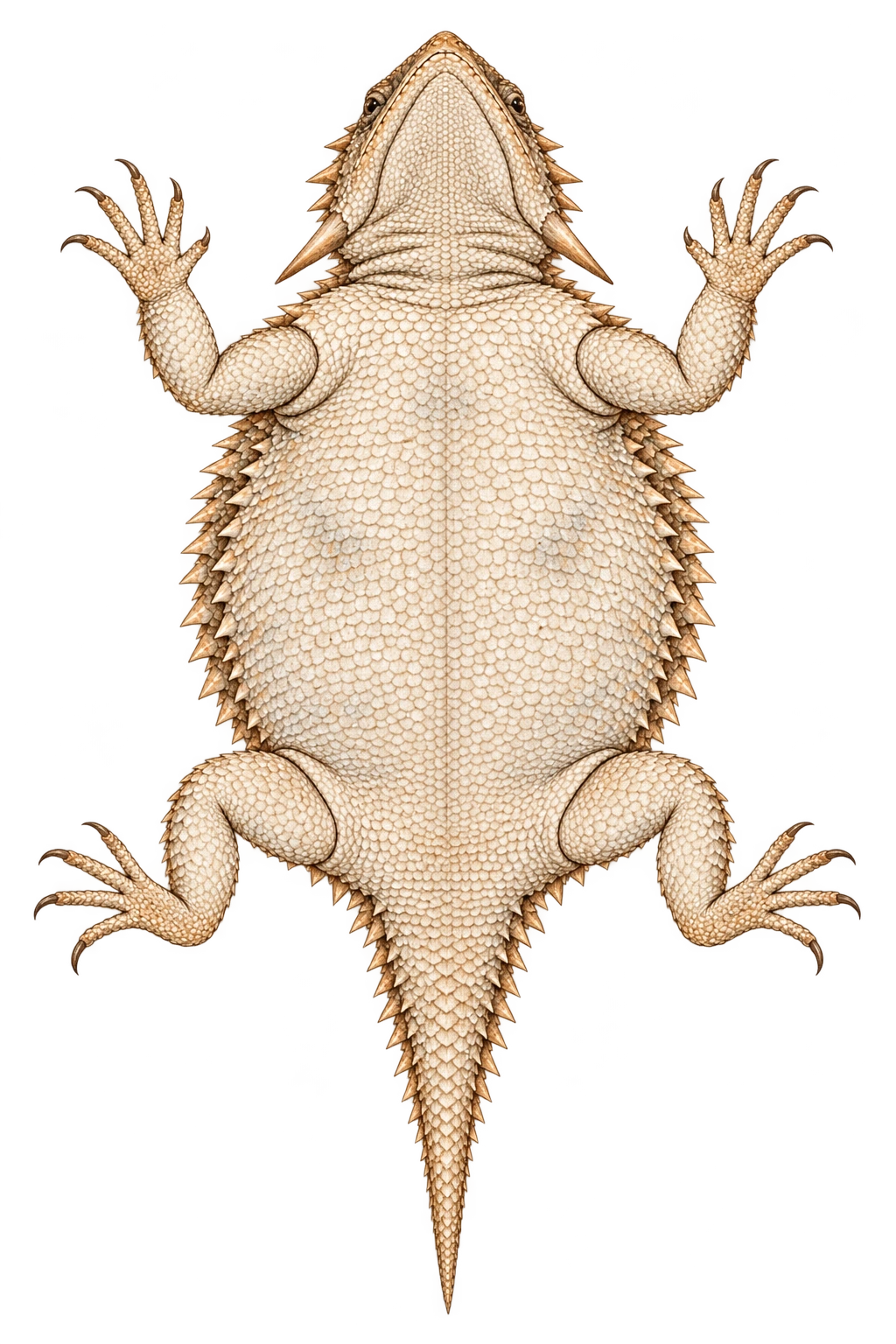 ThroatFront legsCream-colored
Both illustrations show a Texas horned lizard with its head at the top and its tail pointing down.
These are simplified illustrations. Colors and markings vary between individual lizards.
Identification references: Texas Parks & Wildlife and the Oklahoma Department of Wildlife Conservation. Illustrations are simplified; markings vary between animals.
LIFE CLOSE TO THE GROUND
Harvester ants make up much of a Texas horned lizard’s diet. It can wait beside an ant trail and pick off passing ants with quick flicks of its tongue. Beetles and other small creatures sometimes end up on the menu, too.
A horned lizard depends on its surroundings for warmth. After a night underground, it can come out to bask. Its broad, flat body helps it soak up the sun.
Brown, gray, and reddish markings help it blend into the ground. Staying still does the rest. That flat body also casts a small shadow—one less clue for a passing predator.
Sources: Oklahoma wildlife field guide · Horned lizards in West Texas
A FEW GOOD QUESTIONS
No. Texas alone has three native species: the Texas horned lizard, the round-tailed horned lizard, and the greater short-horned lizard. Their horns and body shapes differ, so this diagram shouldn’t be used to identify every horned lizard.
A threatened horned lizard may inflate its body to look larger. The relaxed shape is flatter. The drawings above show a resting shape, with the legs spread so the parts are easier to see.
Texas horned lizards can release blood from around their eyes as a defense. It helps repel predators such as coyotes. This is a response to danger, not a trick to try to make one perform.
Read more: Texas Parks & Wildlife’s guide to West Texas horned lizards.
THEIR PATCH OF GROUND