
Something to eat
Harvester ants are an important food source. Their nests often have a bare patch around the entrance, with ants coming and going across the ground.
 hey, horny toad!
THEIR PATCH OF GROUND
A little bare ground. A patch of shade. Ants passing by. To a horny toad, that can be a good neighborhood.
The Texas horned lizard’s range reaches across the south-central United States into northern Mexico. Its home may be grassland or scrub, with open spaces between the plants and soil loose enough to dig into.
Range and habitat · Texas Parks & WildlifeBEYOND THE STATE LINE
The name says Texas. The range stretches much farther, including parts of Oklahoma, Kansas, New Mexico, and northern Mexico.
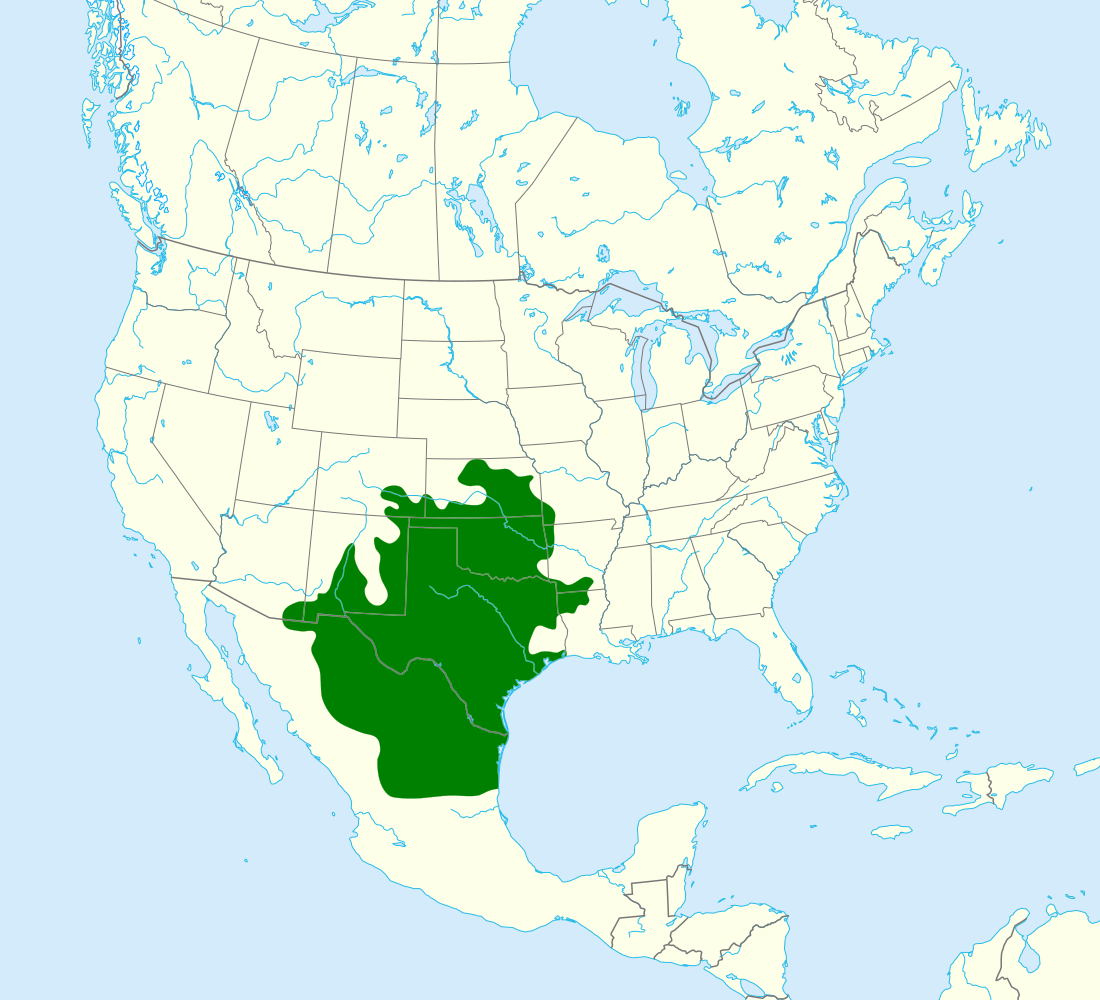 UNITED STATESMEXICOTexasOklahomaKansasNew
A broad range reference—not a promise of a sighting. This map is based on the 2007 IUCN assessment. It does not show how many lizards live in a place, or confirm that they still live there today.
Map by Cephas, created March 22, 2026, via Wikimedia Commons, CC BY-SA 4.0. Original map reproduced unchanged; geographic labels overlaid here. Underlying range source: Hammerson, 2007, IUCN Red List. References checked October 7, 2026. Open the original map.
The green area represents a broad published range across parts of the south-central United States and northern Mexico, including Texas and parts of Oklahoma, Kansas, and New Mexico. It shows a region, not individual lizard locations. For help recognizing the animal, see Texas horned lizard identification.
A place can be inside the range and still lack a good home. Food, soil, and vegetation vary from one patch of ground to the next. Horned lizards have also disappeared from parts of their former Texas range. TPWD’s Horned Lizard Watch explains more.
DOWN AT LIZARD LEVEL
Open native grassland and scattered shrubs can offer food, cover, and places to warm up. The small details matter.
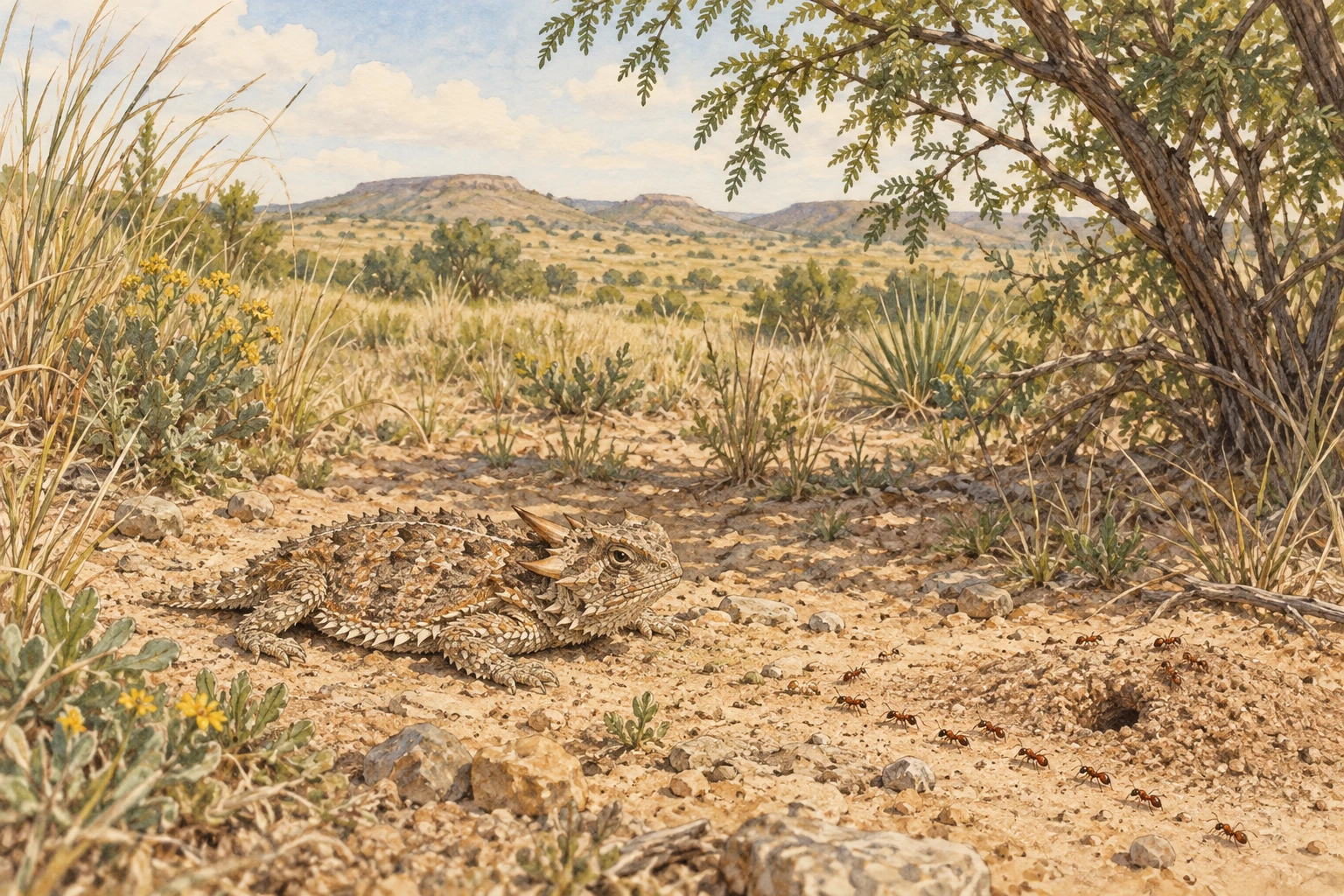
Harvester ants are an important food source. Their nests often have a bare patch around the entrance, with ants coming and going across the ground.
Loose sand or loam lets a lizard dig in. The soil provides shelter, a place to spend winter, and somewhere females can lay their eggs.
Open patches offer places to bask. Nearby grasses and shrubs provide cover. A useful habitat has both open ground and vegetation.
A lizard needs to reach food and shelter. Keeping native habitat and managing vehicle traffic are among the ways landowners can help. See practical ways to protect their habitat.
Habitat guidance: Texas Horned Lizard Watch (TPWD, 2009; PDF) · Texas horned lizard species account.
THREE TEXAS NEIGHBORS
Their ranges overlap in West Texas, but the three species don’t all favor the same kind of ground.
OPEN COUNTRY
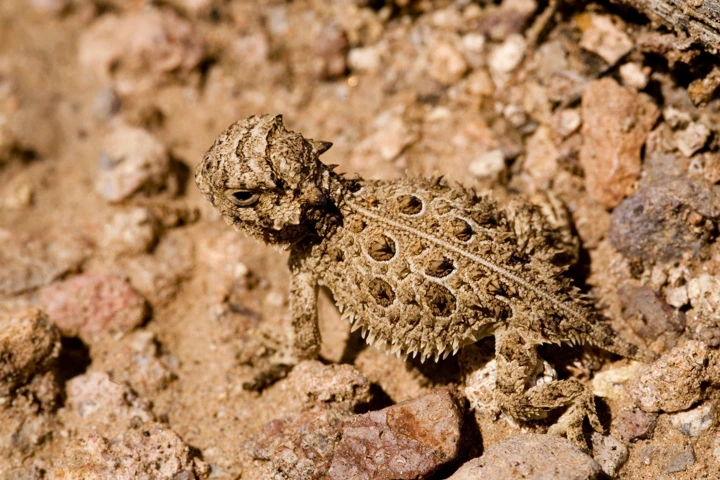
The most widespread of Texas’s three species. It uses a variety of open habitats, usually with loose soil.
Look for: two especially long horns behind the head and a fringe of spiny scales along the sides.
ROCKY GROUND
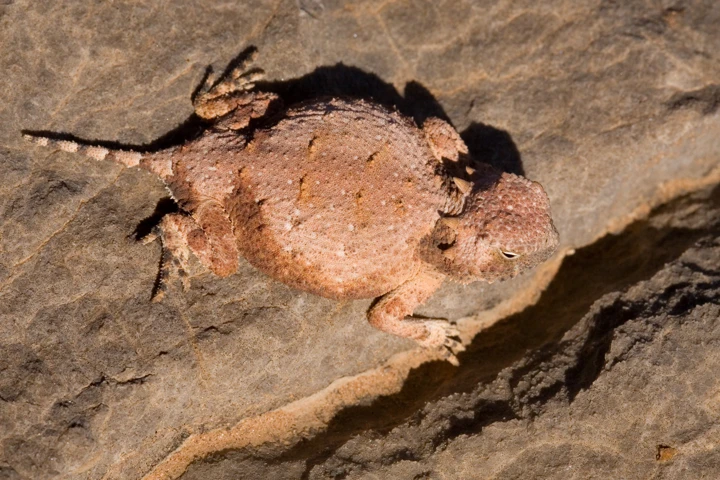
A resident of open, rocky country in the western half of Texas.
Look for: four main head horns of similar, moderate length and a rounded tail.
COOLER MOUNTAINS
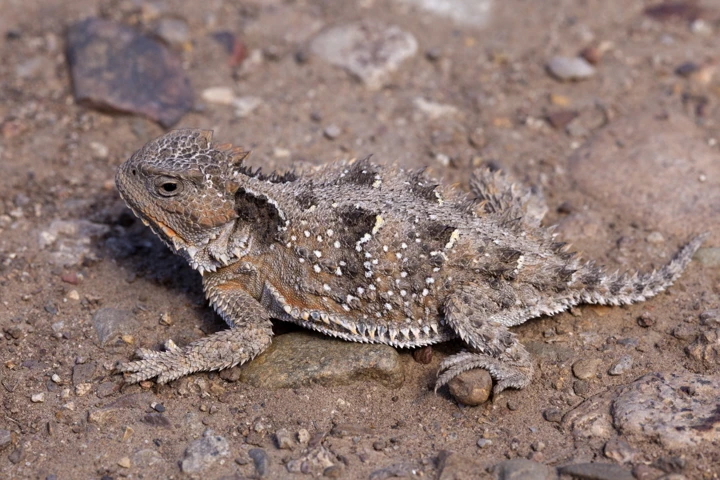
In Texas, it lives at cooler elevations in the Trans-Pecos mountains, including the Davis and Guadalupe ranges.
Look for: much shorter head horns. It’s also called the mountain short-horned lizard.
Species and habitats: Horned Lizards in West Texas (TPWD, 2012). Identification: Texas Horned Lizard Watch.
A CHANGING HOME
Some places that once held horny toads have lost them. Understanding their home is one step toward understanding their decline.
.jpg)

.jpg)